This book picks up where Caste left off.
What happened to American democracy?
It’s the question echoing across the country, from kitchen tables to Capitol Hill.
The Price of Union offers a bold, unflinching answer: our democracy isn’t collapsing because of partisan dysfunction or political threats. It’s collapsing because it was designed to rely on a rigid racial caste system—and as that system begins to weaken in an increasingly diverse nation, the democracy it upheld is coming apart.
Tracing 400 years of American history—from Jamestown to January 6th—The Price of Union tells the story of how caste has powered the American project from the very beginning. Through deeply researched, narrative-rich storytelling, it exposes the original bargain that bound American democracy to racial hierarchy, and the consequences that followed.
The Price of Union doesn’t simply explain how we got here. It dares us to imagine what comes next.
This is the book of the moment.
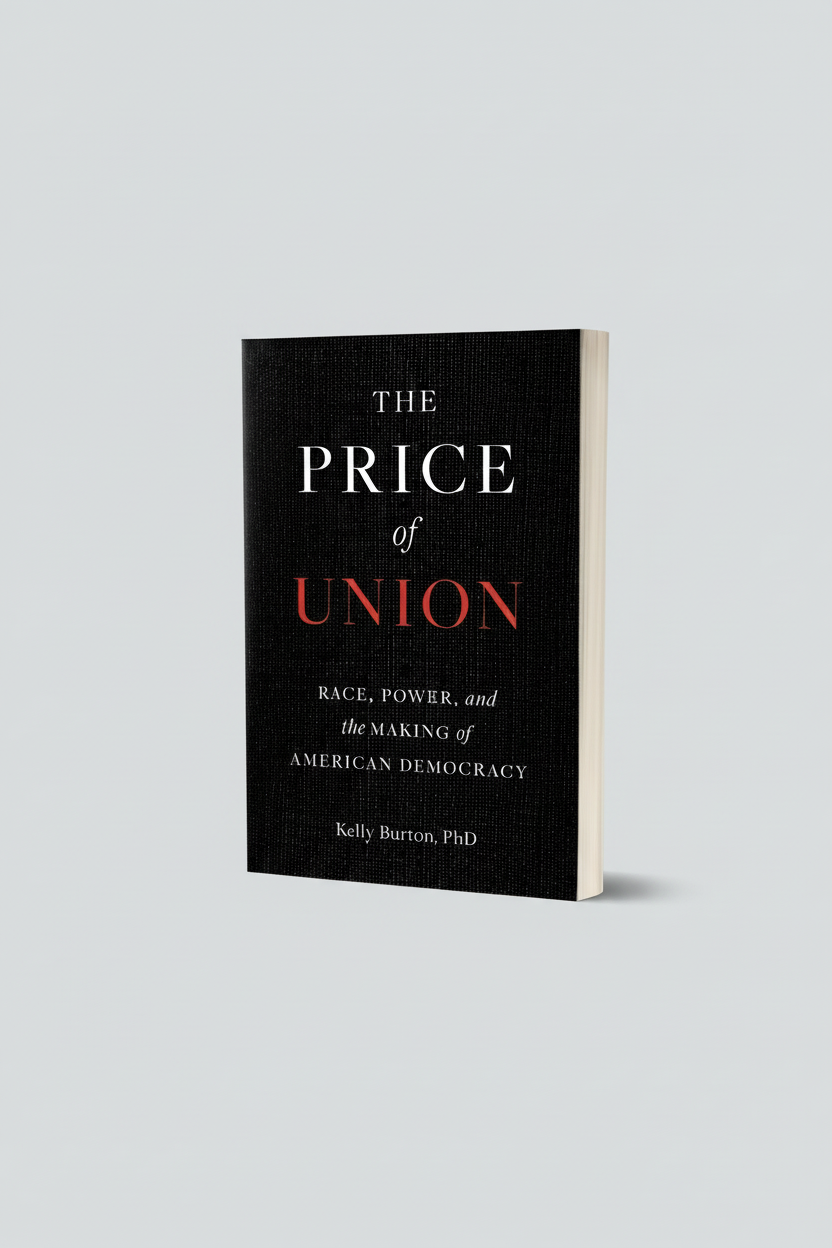
Forthcoming
Fall 2026
The Price of Union: Race, Power, and the Making of American Democracy is a sweeping examination of the structure beneath America’s democratic crisis. Rather than treating racism as a contradiction of democratic ideals, the book argues that racial caste has functioned as the social infrastructure of American democracy. It is the system through which power has been organized, resources allocated, political constituencies formed, and social order maintained. American democracy, in turn, has depended on caste to operate.
From the nation’s earliest foundations, the American project was shaped not only by ideals of liberty and self-government, but by economic imperatives and racial hierarchy. Long before 1776, colonial America was organized as a commercial enterprise rooted in the racialized seizure of land, the exploitation of labor, and exclusion. Democracy emerged later not as a universal promise, but as a governing mechanism designed to protect those arrangements and extend them at scale. Through slavery, segregation, and their modern afterlives, racial caste structured who could claim political rights, who could access economic opportunity, and who could belong fully to the nation.
Spanning American history from its colonial origins through the present moment, Dr. Kelly Burton shows how American political unification has consistently depended on the subjugation of people of color. At major inflection points, including the Founding, Reconstruction, and the rise of anti-woke politics in the modern era, democracy centered on the consolidation of white political power through racial division. Rather than dismantling racial hierarchy, caste was repeatedly reconfigured to serve that end. American union, in this sense, has been achieved through disunion. The result is a democratic system that has struggled to deliver equality and justice by design.
As racial caste weakens in a more multiracial society, the democratic system built upon it begins to destabilize. The mechanisms that once organized political loyalty, mediated conflict, and secured legitimacy no longer function as they once did. What now appears as polarization, institutional paralysis, backlash politics, and authoritarian drift is not simply democratic decline, but the unraveling of a system whose coherence depended on inequality.
The Price of Union argues that today’s democratic malaise cannot be resolved through reform alone. It requires a reckoning with what American democracy has been built to do, what it has depended upon to function, and what it can no longer sustain. More than diagnosis, the book is an invitation to imagine what a democracy beyond caste would require, and what a new foundation for union might demand.